The historical importance of unions in Tunisia
Unions have long been a powerful force in Tunisia, helping to advance workers’ rights and influence political and social transformations. Since the early 20th century, labor movements have played a crucial role in demanding fair wages and better working conditions. From the anti-colonial struggle to post-independence state-building, unions have remained a key player in national decision-making.
How have Tunisian unions evolved over time?
The Tunisian labor movement grew stronger during the French colonial period, as workers organized themselves against exploitation to demand their rights. The founding of the Tunisian General Labor Union (UGTT) in 1946 was a major turning point, bringing workers together under a unified umbrella that had great influence.
After independence, unions played a dual role, supporting national development but also acting as a check on government policies. Under Ben Ali, unions were repressed but remained a powerful force. With the outbreak of the 2011 revolution, unions regained their prominent role, with the UGTT acting as a mediator between political parties and helping to push for democratic reforms.
Main unions and federations in Tunisia
The Tunisian labor movement is mainly influenced by a number of major unions representing various sectors and interests. The most prominent of these is the Tunisian General Labor Union (UGTT), which represents workers in many sectors and plays a major role in political and economic debates.
There are also other federations, such as the Tunisian Union of Industry, Trade and Handicrafts (UTICA), which focuses on the private sector, and the Tunisian Union of Agriculture and Fisheries (UTAP), which defends the rights of farmers. These organizations sometimes work together and sometimes in opposition to each other, depending on economic and political circumstances.
The role of unions in formulating economic policies
Tunisian unions play a prominent role in economic debates, particularly regarding wages, labor laws, and social security. Through negotiations and strikes, unions have succeeded in securing wage increases, reduced working hours, and increased job stability for thousands of workers.
But tensions between unions and the government persist, particularly over austerity measures imposed by international financial institutions. While unions advocate policies focused on social justice, the authorities tend to adopt liberal policies, leading to frequent disputes over public sector employment and the removal of subsidies.
What challenges do unions face today?
Despite their historical influence, unions in Tunisia face significant challenges. Economic turmoil, high unemployment, and pressure from international donors all limit their bargaining power.
Internal divisions also affect the effectiveness of unions, as political loyalties sometimes create differences between leaders and members, weakening collective action. Moreover, private sector workers remain underrepresented compared to their public sector counterparts, limiting the impact of union movements.
Trade union participation in political transformations
In addition to defending workers’ rights, unions have played a key role in Tunisia’s political landscape. During the 2011 revolution, the UGTT emerged as a mediator between political factions, helping to stabilize the country during critical transitional periods. It also had a major influence in shaping the post-revolutionary government, and was awarded the Nobel Peace Prize in 2015 as part of the National Dialogue Quartet.
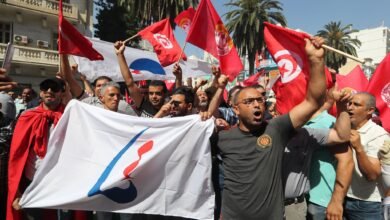
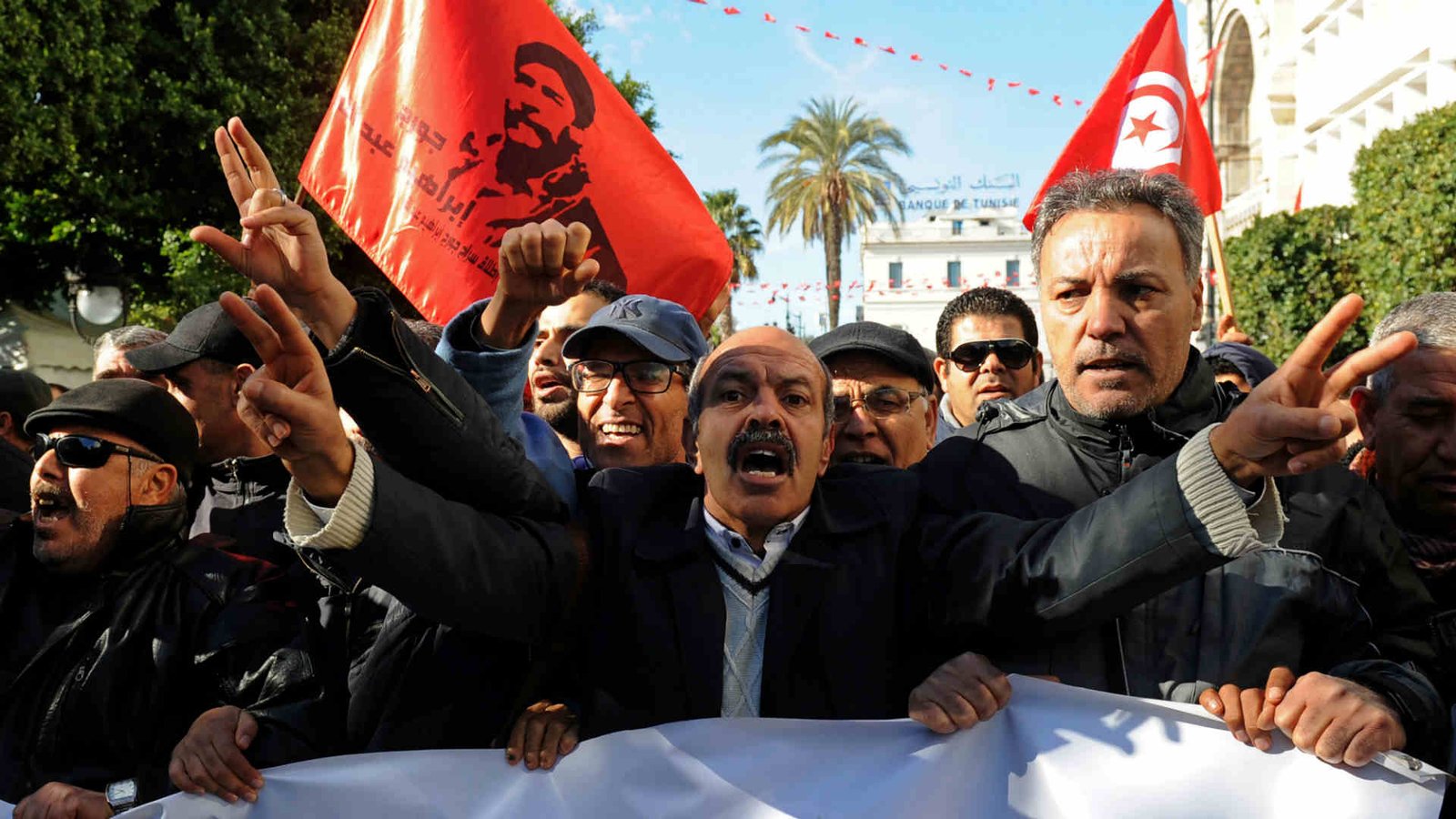
However, the intersection of unions and politics remains complex. While unions advocate democratic governance, they often clash with ruling parties over economic and social policies, leading to waves of strikes and protests.
How do unions affect workers’ rights and social security?
Tunisian unions continue to advocate for improved workers’ rights, including fair wages, health care, and retirement rights. Negotiations have led to improved maternity leave policies, workplace safety laws, and protections against unfair dismissal.
But informal workers and small-scale employees in small enterprises remain largely outside the protection of unions. Expanding union membership to include these groups represents a major challenge for the labor movement.
The relationship between unions and the private sector
The relationship between unions and the private sector has always been tense. While business unions seek to liberalize the economy and reduce labor costs, unions focus on ensuring workers’ rights and job stability.
Negotiations between the UGTT and UTICA often determine the outcome of labor disputes, affecting taxes, investment incentives, and trade regulations. Balancing economic growth and workers’ rights is an ongoing challenge.
Is the future of Tunisian unions in danger?
The role of unions in Tunisia is changing, but they still retain their influence. Their future effectiveness will depend on their ability to adapt to economic changes, strengthen their internal unity, and expand their representation across sectors.
As Tunisia continues to face economic and social challenges, unions remain at the forefront of the struggle for workers’ rights and social justice. Their ability to navigate political transitions and economic pressures will determine their influence in the years to come, ensuring that workers’ rights remain a cornerstone of the country’s progress.